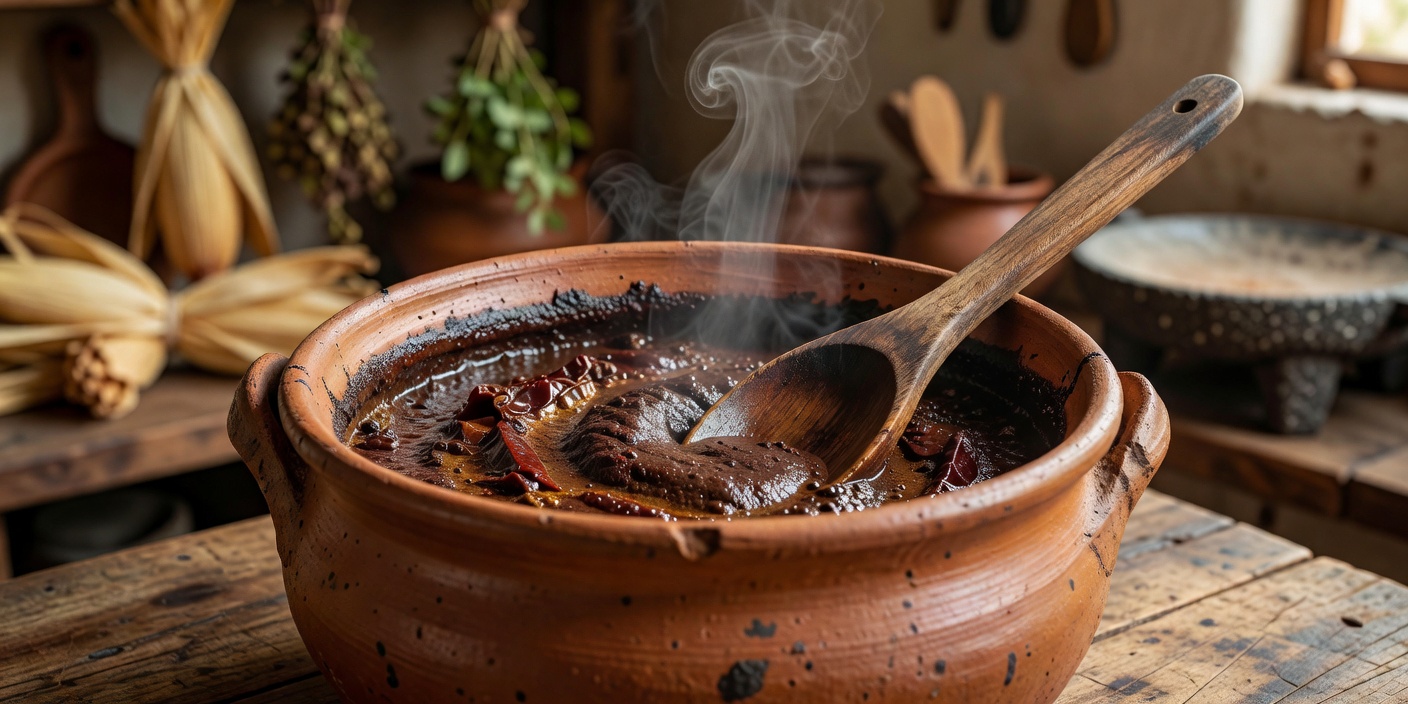
In the high valleys of Oaxaca, southwestern Mexico, cooking is not merely an act of sustenance; it is an alchemical negotiation with geography, heirloom botanicals, and deep genealogical memory. Known throughout the Americas as La Tierra de los Siete Moles (The Land of the Seven Moles), Oaxaca possesses a culinary architecture that pre-dates the Spanish conquest while incorporating Old World spices into complex pastes called mollis.
The Anatomy of a Genuine Mole
A genuine Oaxacan mole is not a chocolate sauce. Rather, it is a finely calibrated suspension of over thirty botanical elements: charred chiles, roasted seeds, toasted aromatics, fried plantains, heirloom corn masa, and bitter criollo cacao nibs. The foundation rests upon the thermal transformation of dried chile skins on a clay comal, pushing the chiles past the point of caramelization to controlled charring without producing astringency.
1. Mole Negro (The Black King)
The deepest, most celebrated mole. The chile seeds are intentionally ignited on the comal until blackened into pure carbon, then soaked in water to remove bitterness while imparting a profound smoky obsidian pigment. Balanced with dark Mexican chocolate, Mexican oregano, allspice, and toasted sesame.
2. Mole Coloradito (The Russet Bridge)
A bright brick-red paste sweetened with ripe plantain, roasted tomatoes, sweet Mexican cinnamon (canela), and sesame seeds. It represents the quintessential home-cooking standard of the Central Valleys.
3. Mole Amarillo (The Herbal Sun)
Vibrant yellow-gold in appearance, this mole eschews chocolate completely, relying on the aniseed aroma of wild hoja santa (piper auritum) and fresh masa dumplings called chochoyotes pressed with a thumb indentation in the center.
4. Mole Verde (The Fresh Botanical)
The only unroasted mole in the canon. Fresh tomatillos, epazote, parsley, and hoja santa leaves are ground raw into pumpkin seed puree (pepita), yielding a vivid green herbaceous velvet.
5. Mole Manchamanteles (The Tablecloth Stainer)
Famous for its fruit-forward profile featuring fresh pineapple, plantain, and sweet apples stewed into a zesty tomato-chile broth that stains linens on contact.
6. Mole Chichilo (The Funeral Rite)
The rarest mole, traditionally prepared for mourning rituals. It uses toasted tortilla ashes and avocado leaves to produce a hauntingly bitter, savory, and mineral-dense profile.
7. Mole Rojo (The Fiery Festive)
Similar to Coloradito but intensified with more pronounced dried chiles, cloves, and whole almonds, often served over turkey at village weddings.
Preserving the Metate in the Modern Age
While modern blenders have entered Mexican kitchens, traditional Oaxacan cocineras tradicionales still insist on grinding initial batches over a volcanic stone metate with a handheld mano stone. The friction of the porous basalt releases the natural oils of the seeds and chiles in a way electric blades cannot replicate without overheating the delicate volatile oils.
To learn more about indigenous sourcing and international culinary expeditions, explore our World Cuisines Directory or contact our research desk at [email protected].