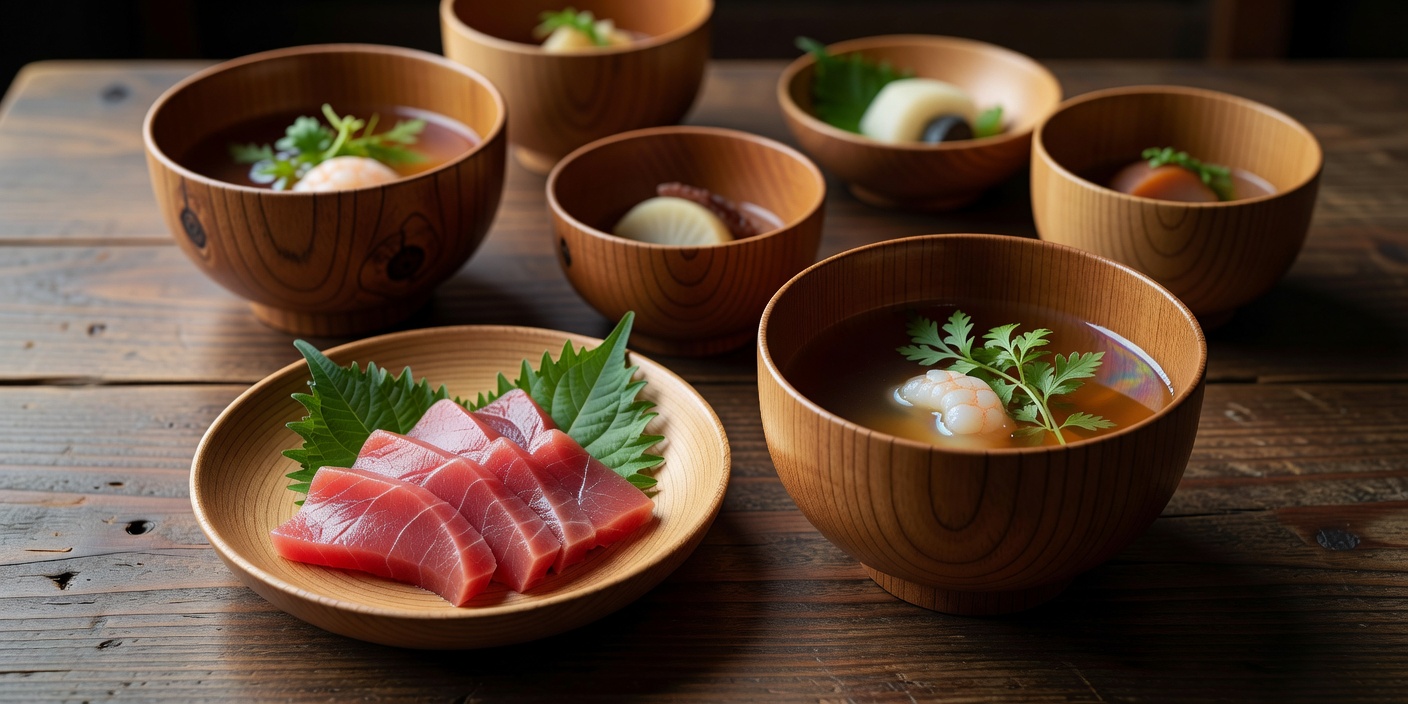
In Kyoto, the ancient imperial capital of Japan for over a millennium, cooking evolved far beyond nutrition to become an austere aesthetic practice deeply tied to Zen Buddhism, the Sen no Rikyu tea ceremony (chakaiseki), and the imperial court's ceremonial banquets (yusoku ryori). At the center of this culinary cosmos is Kaiseki: a multi-course progression that mirrors the exact micro-season (one of 72 traditional seasonal windows known as ko) through temperature, ceramic textures, and subtle flavor restraint.
The Umami Chemistry of Ichiban Dashi
Unlike Western culinary stocks that rely on hours of heavy collagen extraction from roasted animal bones, the spine of Kyoto cuisine is Ichiban Dashi (first broth)—a clear infusion created in under twenty minutes through synergistic umami chemistry.
The Glutamate-Inosinate Multiplier
Dashi extracts free glutamic acid from wild Rishiri kelp (Laminaria japonica) harvested in cold Hokkaido waters and aged for up to three years in Kyoto storehouses. When this kelp broth (heated to exactly 60°C to avoid bitter alginates) is combined with the inosinic acid of mold-fermented, dried skipjack tuna shavings (Hon-Katsuobushi), the perceived savory intensity on human taste receptors multiplies by a factor of eight without masking the pristine flavors of seasonal fish or vegetables.
Kyo-Yasai: Heirloom Terroir of the Kyoto Basin
Surrounded on three sides by mountains (Higashiyama, Kitayama, and Nishiyama), the Kyoto basin features soft, mineral-gentle underground well waters and fertile alluvial soil that gave rise to distinct heirloom cultivars known as Kyo-yasai:
Kamo-Nasu: A spherical, dense eggplant that maintains structural integrity when simmered in dashi or broiled with sweet saikyo miso.
Shogoin Daikon: A round, tender white radish free of pungent fibrous strands, prized for winter simmered dishes (Nimono).
Kujo Negi: Delicate green scallions with gelatinous inner mucilage that imparts natural sweetness to duck hot pots.
The Traditional Kaiseki Course Sequence
A master Kaiseki meal progresses systematically across cooking methods: Sakizuke (appetizer reflecting the season), Hassun (the thematic centerpiece displaying mountain and sea delicacies on an eight-inch cedar square), Mukozuke (seasonal sashimi sliced with single-bevel yanagiba knives), Suimono (the clear dashi soup testing the chef's broth purity), Yakimono (charcoal grilled seafood), and Gohan (fresh seasonal rice cooked in earthen Donabe pots).
For more field studies, explore the World Cuisines Directory or contact our editorial desk at [email protected].