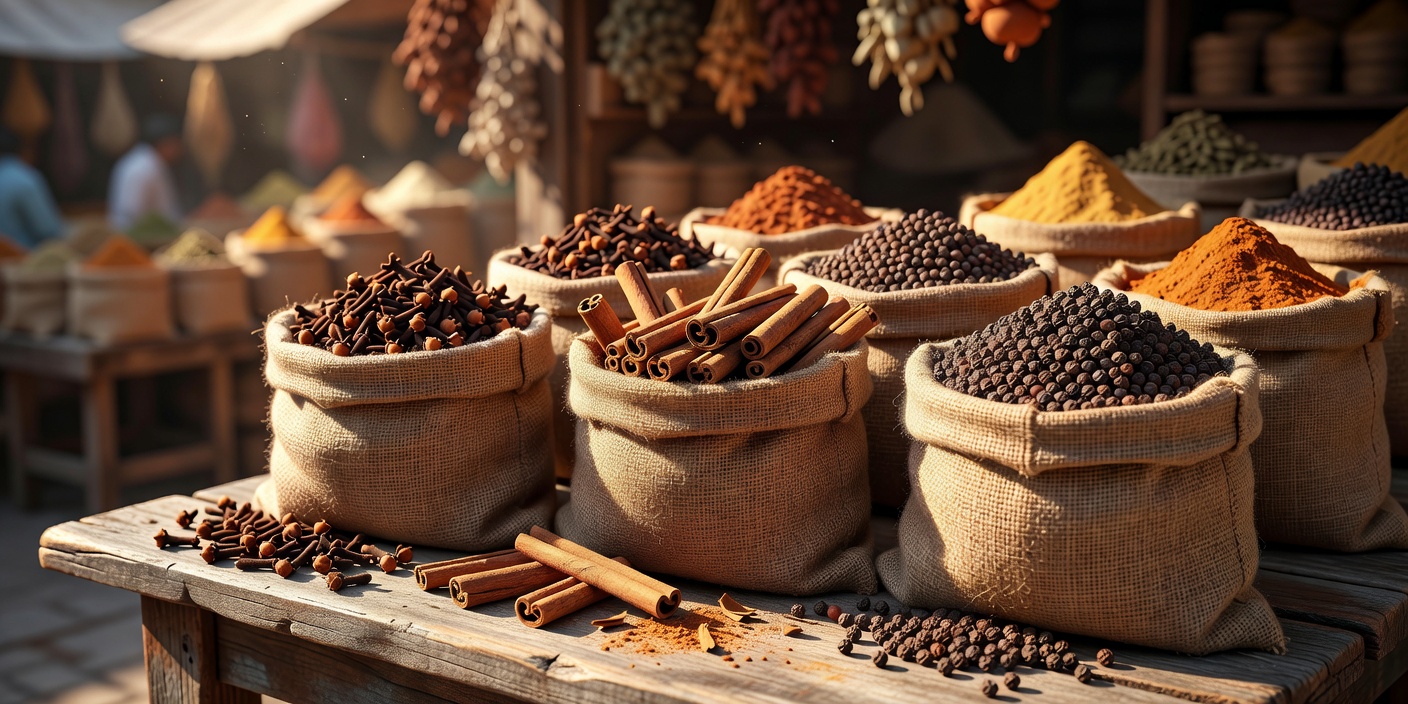
Long before steam engines conquered oceanic currents, global gastronomy was governed by the rhythmic breath of the planet: the Indian Ocean Monsoon. Between May and September, the southwest monsoon propelled Arabian, Persian, and Roman merchant dhows eastward across the Arabian Sea to India's southwestern Malabar coast. Between November and March, the northeast monsoon reversed direction, blowing ships laden with black pepper, green cardamom, and ginger back toward the Red Sea and Persian Gulf ports.
Tellicherry Black Pepper: The Black Gold of Malabar
In the dense tropical rain forests of the Western Ghats mountain range in Kerala, the vine Piper nigrum flourished in volcanic, nutrient-rich soil. The unripe drupes, harvested by hand and dried under direct sun until their outer pericarps shrunk and blackened, contained high concentrations of the alkaloid piperine. Piperine stimulates human taste receptors by triggering the transient receptor potential vanilloid 1 (TRPV1), creating a sensation of heat that also triggers salivation and digestive enzyme secretion.
In classical antiquity, Tellicherry pepper was weighed directly against silver coins in the markets of Alexandria and Rome. Pliny the Elder famously complained in his Naturalis Historia about the staggering economic drain Rome suffered to purchase Indian pepper for its garum sauces.
The Moluccas and the Nutmeg Monopoly
Further east across the Malacca Straits lay the Banda Islands within the Maluku archipelago of eastern Indonesia. For thousands of years, these tiny volcanic specks in the Pacific were the sole place on Earth where the evergreen tree Myristica fragrans grew naturally. The fruit produced two precious spices simultaneously: the inner kernel (nutmeg) and the delicate crimson lace covering it (mace).
Rich in myristicin and elemicin, nutmeg possessed antiseptic qualities that allowed medieval Europeans to preserve meats during winter months while masking oxidation flavors. The frantic pursuit of nutmeg and clove monopolies drove the age of European maritime exploration, rewriting political borders and culinary techniques across both hemispheres.
Discover more in our World Cuisines Directory or contact our historical inquiries desk at [email protected].