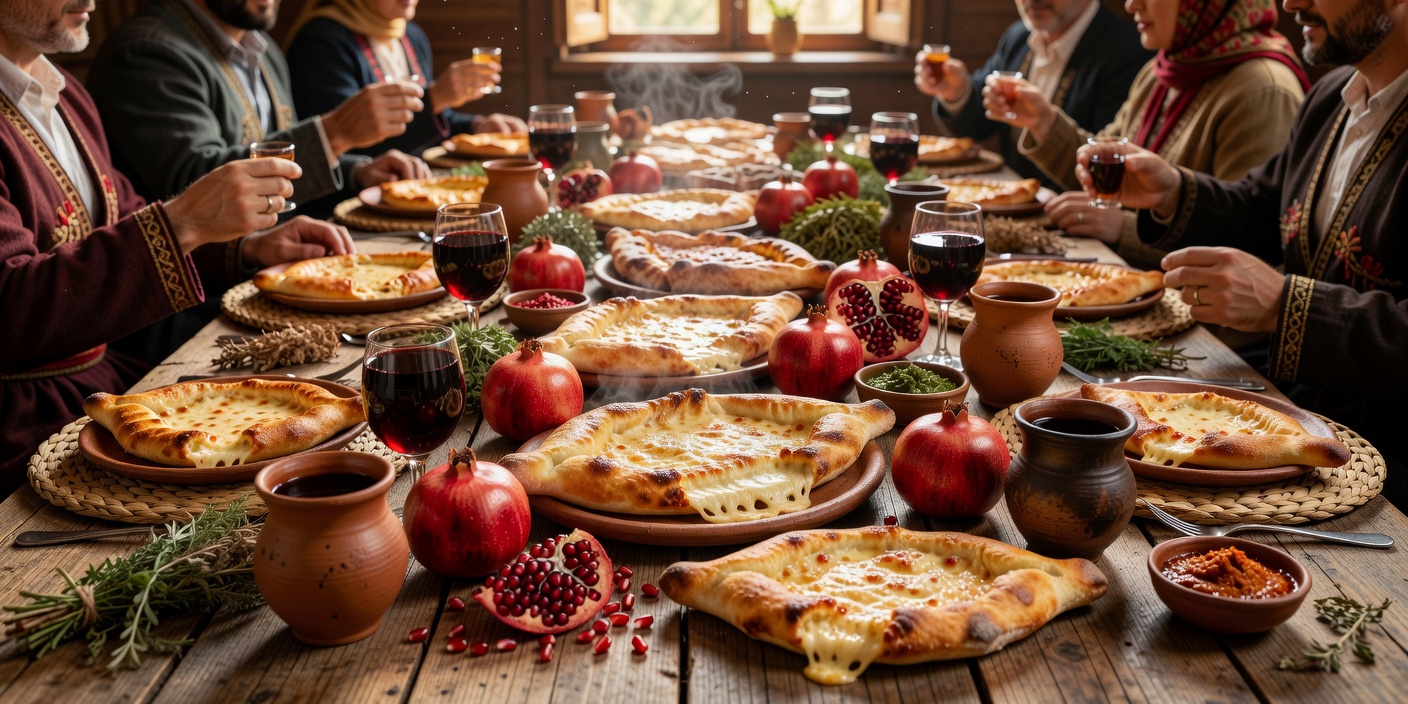
Situated in the rugged mountains of the South Caucasus between the Black Sea and Caspian Sea, Georgia (Sakartvelo) occupies an extraordinary biogeographical crossroad. It is here that archeologists have unearthed the oldest chemical evidence of viniculture on Earth: Neolithic clay pottery shards dating to 6,000 BCE embedded with tartaric acid crystals.
Kvevri: Subterranean Thermal Wine Fermentation
Unlike modern stainless steel tanks or small oak barriques, authentic Georgian wine is made inside Kvevri—massive egg-shaped terracotta amphorae holding up to 2,000 liters, lined with melted beeswax and buried entirely beneath the ground of the cellar (Marani). Whole grape clusters (including skins, seeds, and stems called Chacha) are pressed into the vessel and left to ferment naturally with ambient wild yeasts.
The ground provides a steady subterranean temperature (around 12–14°C), while the conical bottom allows dead yeast cells to collect in a tiny pocket, preventing bitterness while allowing the wine to undergo prolonged skin contact (6 months or more). The resulting amber wines boast intense tannins, dried apricot aromas, and high polyphenols.
The Botanical Alchemy of the Georgian Table
Georgian cuisine relies heavily on walnut purees (Bazhe and Satsivi), sour cherry plum reductions (Tkemali), and two indispensable herbs: Utskho Suneli (blue fenugreek, Trigonella caerulea) and crushed dried marigold petals (Imeretian Saffron), which provide a nutty, warm fragrance unmatched in neighboring culinary regions.
During the formal banquet known as the Supra, dishes are served simultaneously in overflowing layers: Khachapuri (leavened cheese breads from various provinces), Khinkali (steamed twisted soup dumplings from the high Tusheti mountains), and Pkhali (finely minced spinach, beet tops, and walnuts seasoned with garlic and pomegranate seeds).
Explore our complete World Cuisines Directory or contact our Caucasus field desk at [email protected].